笠井叡 舞踏をはじめて <18>
Akira Kasai Begins Butoh <18>
Akira Kasai studied under Kazuo Ohno, interacted with Tatsumi Hijikata, and gave birth to the word "butoh". He will talk about his life and his own butoh.
I was 35 years old when I entered the Stuttgart Eurhythmium. Surrounded by young classmates who had just graduated from high school, I learned the basics of eurythmy.
There are many eurythmy schools in Europe, and the Stuttgart Eurythmium, where I entered, was one of the most famous. It is what is called a vocational school in Japan, and people from all walks of life enter the school for different reasons, some having graduated from Waldorf schools, others wanting to learn dance, etc. The school is a four-year program, and in addition to eurythmy, students study history, mathematics, physics, and all kinds of other subjects, including general subjects.
There is a written test to enter the school, and you have to submit a paper about yourself and your reasons for entering the school. However, to tell the truth, I entered the school without following these procedures. Butoh was already well known in Germany at that time, and the people at the school seemed to recognize me. When I told them that I wanted to enroll in the school, they accepted me and said, well, that's fine.
About 1/3 of the people who enter eurythmy schools want to become eurythmy dancers. Others want to become educators or therapists. Eurythmy has a therapeutic aspect, and although there are many people who want to become eurythmy therapists, it is actually very difficult to become a therapist.
What is important in eurythmy counseling is to cure with the power of words, not drugs. It is not the meaning of words, but the therapeutic power that words have that is used in eurythmy. There are four types of words: words in the head, words going out of the throat, unvoiced words that stay only in the body, and words flowing endlessly out of the body, and when we practice these in an organized way, we can use words in a therapeutic way.
However, there is one problem: the therapeutic power of words is the same as the power of hypnosis, so there is a danger of putting the patient into a hypnotic state. In general, speech therapy tends to use hypnotic methods, but in eurythmy, it is absolutely forbidden to induce the patient into a hypnotic state. The reason is that it becomes a habit. The effect may appear temporarily, but eventually the treatment may become ineffective. This is the most difficult part because the person receiving the treatment is inevitably in a hypnotic state, even if the person giving the treatment is not. In eurythmy, it is said that it takes a lifetime to be able to use the correct energy as a therapist.
Half of the students were from abroad, mostly from Europe (England, France, Scandinavia, etc.), but also from the U.S. and as far away as Mexico. It was a time when Germany was still divided between East and West, and people risked their lives to come over the wall to the West, long before the integration of the EU, so things were different than they are today. There were people who came over the wall to our school, and I heard stories about how they were about to be shot, but they were let off because they played the piano, which they were good at, and they were saved because they could play the piano.

In general, dance is based on the premise of the body, on what one can do with one's own body. In the case of eurythmy, however, the characteristic is to put the body back into the process of its formation and make the body's perception into a dance, which is a big difference from ordinary dance. Eurythmy starts from the process of the birth of the body, from the consciousness of why we were conceived, what was the body of the fetus like, and why we have a body. That is why the choreography is completely different from ordinary choreography.
The basic premise of eurythmy is that it is based on Steiner's idea of reincarnation. In contrast to the theory of the body living only once in this world, the idea of reincarnation is to live twice. Steiner's concept of reincarnation, when the body is created in reincarnation, divides the human body into two parts: the head and the lower part from the neck down. The body, which is the result of everything a person has done in previous lives, becomes the head in the next life when he or she reincarnates. The body from the neck down becomes the part of the body that will be rebuilt from scratch in the next life. The head is the previous life, meaning that your current head has everything you did in the previous life.
If we view the head as the body of the previous life, the result of the hands of the previous life becomes the upper jaw, and the result of the feet of the previous life becomes the lower jaw. The mouth is where the essence of the previous life's body is concentrated; the life force is created by the upper and lower jaws. To move the mouth is to move the upper and lower jaws, and to speak is to dance there with the body of a previous life. The mouth is, in a sense, the most fundamental part of the dance. Therefore, the power of the words that come from the mouth and vocal training are very important in eurythmy.
There are four kinds of words. The first is the language you speak in your head. As long as they are spoken in the head, people cannot understand them. When you put them on air vibrations and speak them out loud, the inaudible words in your head become audible. This is the second kind of language. A voice is something that resonates because it is generated in air, and if you generate a voice in a vacuum, it will not be a voice. The voice is there, but if there is nothing to make it resonate, it does not become a voice. The two, the voice in the head and the voice in the vacuum, are not the same at all. When you speak in a vacuum, even if you can't hear it, its resonance becomes energy. Energy is generated. This is the third word. The same thing is done without a body. Vocalization without a body. This is the fourth word. For example, seeing and hearing are possible because there are sense organs. When we pray to the deceased, they hear them even though they have no sense organs. The ears of the dead hear everything. The dead hear what is going on in their minds because it is simply what is going on in their minds. The dead hear even without sense organs. This means that we can speak with our whole body even without a body. Eurythmy is to practice this.
You speak the concept you have in your head to others. When you speak, the other person empathizes with you. Words connect people to each other. Abstract concepts connect each other in a vital direction. There is a big difference between abstract words in your head and when you speak to others. When we try to connect more, we connect with energy. This is generally a form of dance, and in that sense, dance is language uttered in a vacuum. In eurythmy, we believe that at the moment of vacuum vocalization, human beings are connected to each other.
The most basic practice of eurythmy is the training of the dental voice, the lip voice, the tongue voice, and the palatal voice, and these four vocalizations are thoroughly practiced. For example, each of the five vowels of a - e - i - o - u and twelve consonants have different vocalizations, and through vocal practice, the students learn to channel the power of their voices throughout the body. One-third of the eurythmy class is devoted to vocal exercises, one for vowels and one for consonants, respectively. In addition, music is used to practice dancing with songs and dancing with melodies. The methodology is very clear.
Eurythmy practice begins with vocal technique, vocal training, and stylistic exercises to create the body. Eurythmy has one philosophy that words are not to be viewed as conveying meaning, but that to vocalize is to create. In eurythmy, the key word is how to reconcile words with the body, rather than thinking of movement as dance. Just as an orchestra cannot play without a conductor, it is important for the human body to have a conductor or not. The mouth is the conductor of the infinite number of movements that can be created, and the idea is that the movements start from the mouth and spread to the entire body.

Continue to Akira Kasai Begins Butoh <18>.
Profile
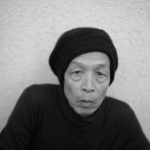 Akira Kasai
Butoh dancer and choreographer, who became friends with Tatsumi Hijikata and Kazuo Ohno at a young age in the 1960s, and gave numerous solo butoh performances mainly in Tokyo and elsewhere. In the 1970's, operated Tenshikan Butoh dance school where he trained numerous butoh dansers. From 1979 to 1985, studied abroad to study in Germany.Studied Rudolf Steiner's anthroposophy and eurythmy. After returning to Japan, he did not perform on stage and was away from the dance world for 15 years, but returned to the stage with "Seraphita". Since then, he has given numerous performances in Japan and abroad, and has been praised as "the Nijinsky of Butoh". His masterpiece "Pollen Revolution" was performed in various cities around the world. He has created works in Berlin, Rome, New York, Angers, the Centre National de Danse Contemporaine de France, and elsewhere. https://akirakasai.com